Workshop Report
WATER MIRROR
China Thailand 2025 International Multidisciplinary Studio
School of Architecture of Tianjin University
Department of Urban and Regional Planning, Faculty of Architecture, Chulalongkorn University
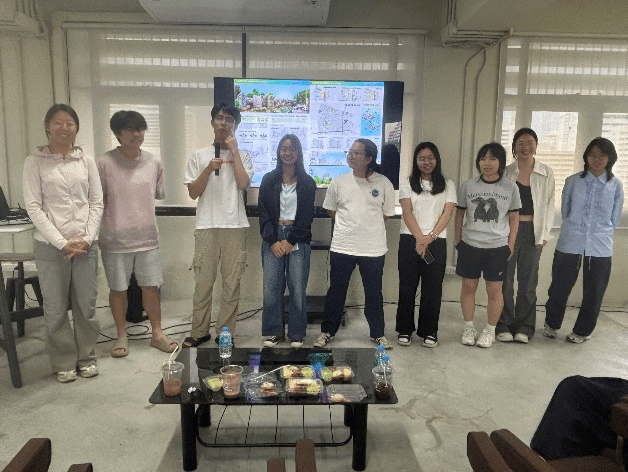
Following the Thai students' visit to Tianjin in October, the Chinese students' visit Bangkok in return. From November 8 to 22, 2025, the Sino-Thai Joint Design Workshop was successfully held at Chulalongkorn University. The 15 days workshop was attended by 9 students from Tianjin University. The Chinese delegation consisted of 2 fifth-year undergraduate architecture students and 7 third-year undergraduate urban planning students from the School of Architecture at Tianjin University, led by Associate Researchers Vassilia Pirierros and Li Jinxuan. They were joined by over 30 architecture Thai students from the Department of Urban and regional planning, Faculty of Architecture, Chulalongkorn University.

The workshop was part of an international multidisciplinary Joint design studio titled "Water Mirror". It focused on the comparative study of Tianjin (China) and Bangkok (Thailand), both coastal cities. The aim was to raise students' awareness of the risks of marine submersion and flooding linked to climate change and to understand their impact on territories, cities and inhabited areas. Students are encouraged to seek both emergency and long-term solutions for living with water and to adapt urban planning, landscape and architectural designs accordingly.
Opening ceremony
The workshop officially opened on the morning of November 9. Professor Sarayut Supsook, Dean of the School of Architecture at Chulalongkorn University, welcomed the arrival of our students. Associate Professor Prin Jhearmaneechotechai, Director of Urban and Regional Planning and course leader, introduced Bangkok Water Urbanism and Architecture.

During the first week in Bangkok, the Chinese students immersed themselves in the city. Every day, despite the heat and rain, they walked through the historic center, Chinatown, the Thunburry district, the CBD etc. Walking helped them understand the scale and the urban fabric of the metropolis, while journeys by public transport, boat or aerial metro allowed them to experience the urban system. Bangkok is a three-dimensional city. Two layers are superimposed: at ground level, a layer of ShopHouses or houses on stilts, and above this historic fabric, towers emerge from complex land arrangements. Finally, the visit to the Mahanakorn Tower (designed by OMA), provided a panoramic view from above.

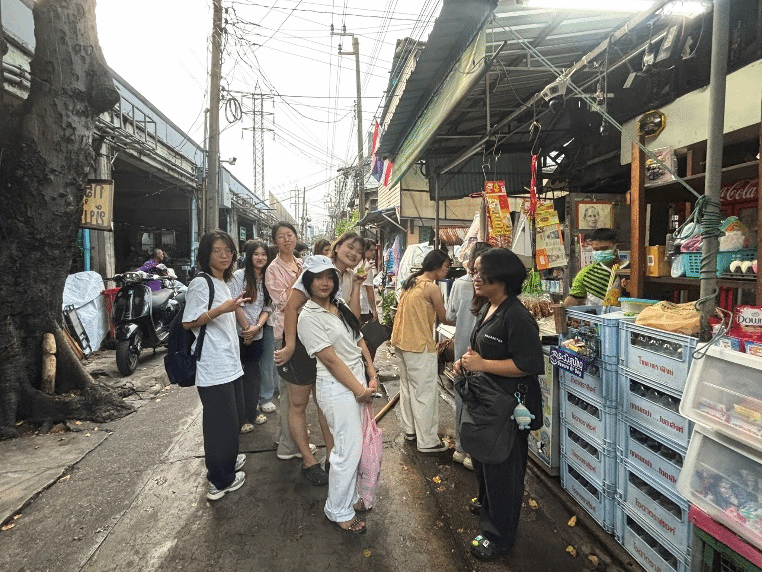

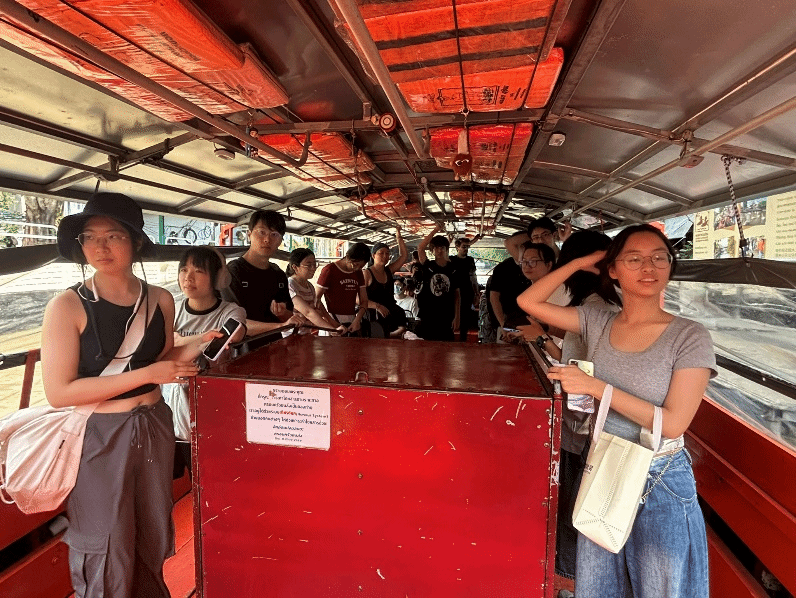

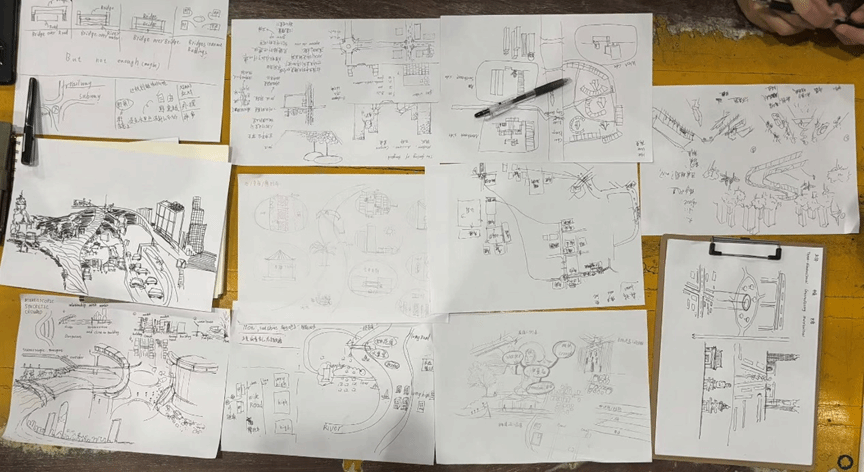
The students were asked to transcribe their understanding of the metropolis through mental maps.
November marks the end of the rainy season in Bangkok. The risk of flooding is very high due to the accumulated runoff water from the upstream plain. Moreover, the arrival of a typhoon from the west and heavy rainfall put the city under pressure. The students were able to see the rising waters of the Chao Praya River up close. In Ayutthaya, the ancient capital on the North, some of the temporary fences protect temples but some houses are already flooded.


The students visited the Benjakitti Sponge Park (designed by Turenscape) and the Nonsi Canal Redevelopment, two of the projects led by Bangkok Metropolitan Administration to increase the city's resilience and improve the quality of the spaces adjacent to the canals.

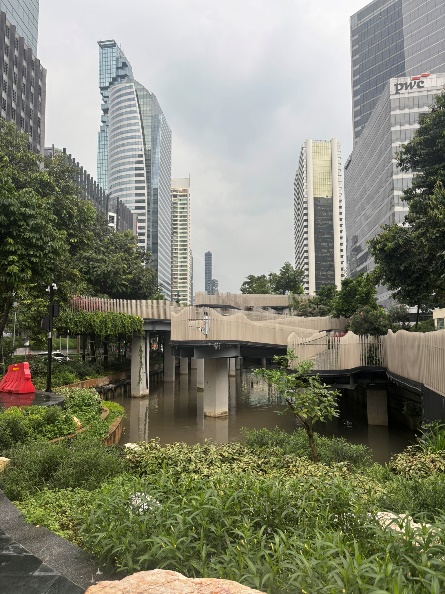

At the end of this first week, the students made 3-minute videos to summarize their vision of the presence and risk of water in Bangkok.
Simultaneously, two conferences were organized during the workshop. The first was given by Associate Professor Li Jinxuan on the urban regeneration of Tianjin. The second was a conference by Dr. Ludovic Andres and Emmanuel Protte, GIS director at Nice Côte d'Azur metropolis on modeling tools for smart city planning and management.


Additionally, a visit to Chinatown and a discussion were held with representatives of the Chinese community in Bangkok. Chulalongkorn University is currently conducting surveys on Everyday Heritage and Professor Prin Jhearmaneechotechai was pleased to receive insights from the Chinese partners.

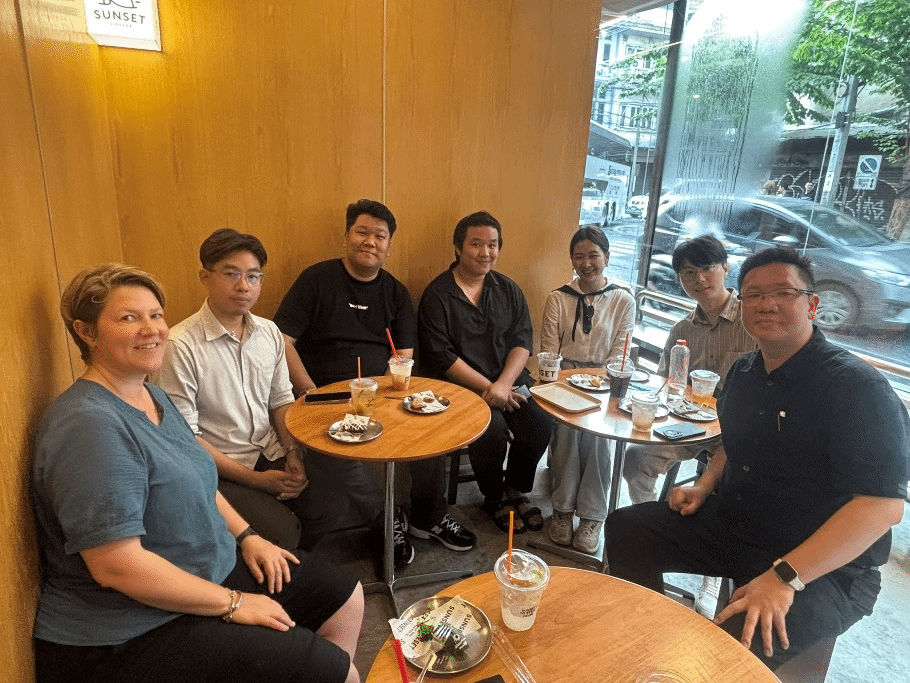
Our Chinese students had the opportunity to join Professor Panthira Julayamont's urban project course about Just Urbanism, which focuses on inequality by addressing design for specific personas.

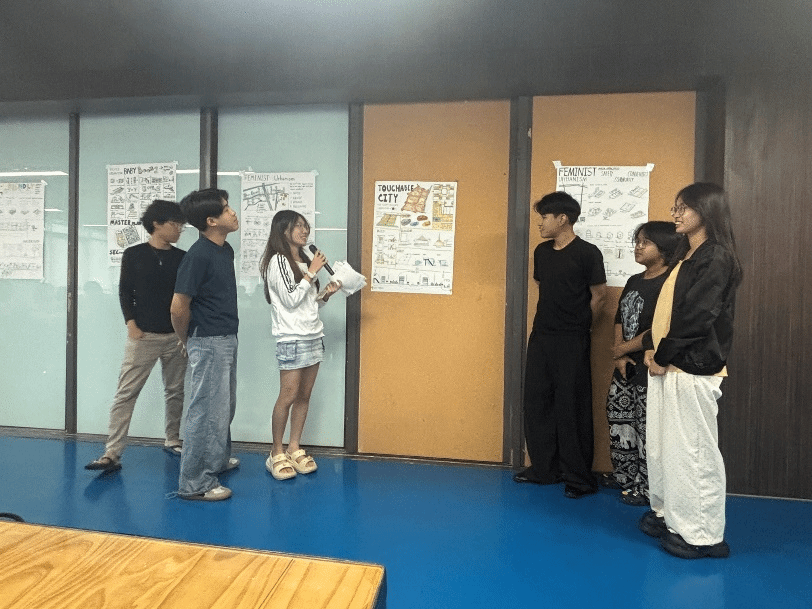
These two weeks provided an opportunity for Thai and Chinese students to collaborate on a regeneration project for the Thonburi district. The students were divided into 7 groups. Each group has developed a thematic strategy adapted to the specificities of their assigned urban area. All groups focused on urban densification, connectivity and resilience, paying particular attention to the revitalization of canals for a better environment and improved spatial use.


The final presentation was successfully delivered to members of the Bangkok Metropolitan Administration, including the urban planning and water management departments. They appreciated the innovative strategies and discussed the potential implementation of these ideas and concepts into their practice. After two weeks of dedicated work, all students received a certificate for their participation in this International Multidisciplinary Joint Design Studio.